
Fireflies and LEDs
“Let your light shine…and glorify your Father” (Matt. 5:16).
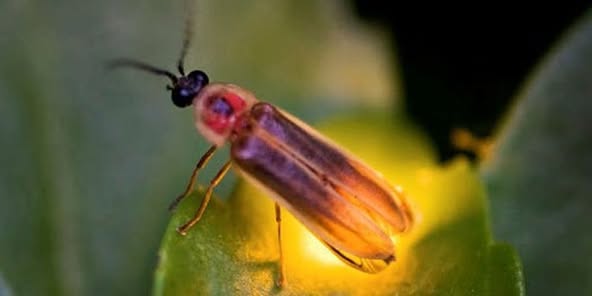
Fireflies have inspired energy-efficient lights through biomimicry. Here’s a jaw-dropping estimation: A global shift to highly efficient LED lights could avoid 800 million metric tons of CO2 emissions per year, equivalent to the output of 684 coal-fired power plants. What scientists have learned through studying the design of a firefly’s lantern is staggering!
There are two significant ways to reduce the energy necessary to produce light: first, make conversion of energy to light more efficient, and second, increase the percentage of light being emitted. In a standard lightbulb, 10% of the energy is light while the other 90% is given off as heat. What a waste! LED technology has vastly improved the energy to light conversion percentages. That market has expanded radically over the past ten years. And now, research is leading to new ways to allow more of the light to be emitted from LEDs for all to see.
Conversion of electric energy to light occurs internally in the light emitting diode (LED) and must “escape” to provide light externally. It must pass through the surface of the diode, and therein is the opportunity to increase efficiency. Internal reflection off the surface traps a significant amount of the light inside which never escapes the diode.
Jean Pol Vigneron visited Central America somewhere around 2010 to conduct field work on the Panamanian tortoise beetle. While there he also noticed clouds of twinkling fireflies and brought some back to his lab to examine in greater detail. What he discovered allows us to further increase LED efficiency.
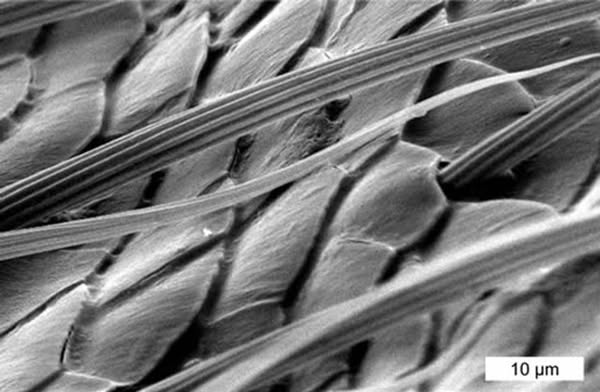
Using an electron microscope to examine a firefly’s “lantern” (the tail), Vigneron made a surprising discovery. Rather than a smooth diaphragm, the surface was a series of asymmetric scales that were responsible for light emission. Testing proved that the sharp and jagged edges provided the chief escape route for the light.
What if a similar texture were reproduced for LED emitters? Perhaps the conversion of energy to usable light would become even more efficient. In fact, such surfaces have been generated and applied. Tests showed a 55% increase in photo-transmission.
I find it impressive, as well as reassuring, that scientists continue to discover design details from the Great Designer that improve our quality of life. Isn’t your God amazing‽
I see the light; do you?
Rod MacArthur
206.949.0325
rod_macarthur@comcast.net
credit for the b/w photo:
The misfit scales found on the lantern of the Photuris firefly. Researchers found that the sharp edges of the scales let out the most light. Credit: Optics Express.