
Figs & Fig Wasps
“FRUIT TREES BEARING FRUIT AFTER THEIR KIND, WITH SEED IN THEM” (Gen. 1:11b).
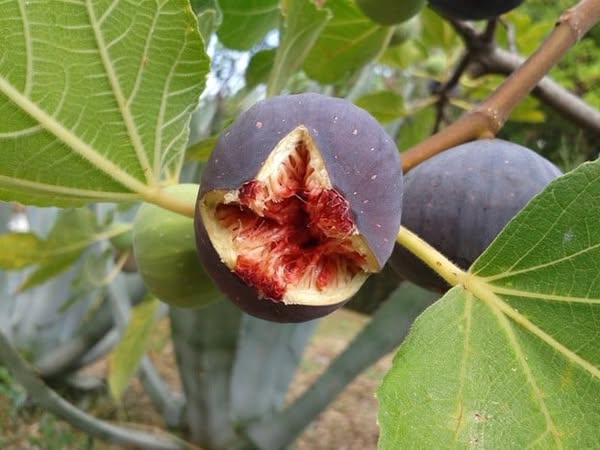
Did you know that figs bloom outside in? The flower of a fig tree is inside its fruit (see pic). That’s gotta make it hard to pollinate!
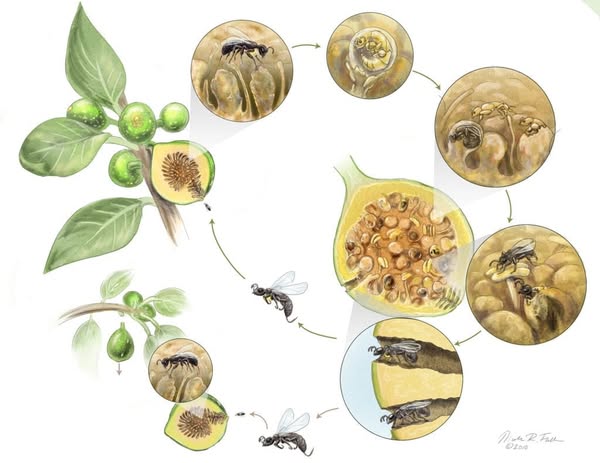
Not to fear: God designed a unique and interesting symbiotic relationship between figs and fig wasps (unless of course, one accepts the highly improbable alternative of this intricate system co-evolving). Following God’s programming, a female fig wasp lands on a developing fig, follows a tiny tunnel into the fruit, and deposits pollen on the bloom. (Remember, it is inside the fig. You’ll see how she obtained the pollen as you read on.) She must amputate her limbs to complete her journey through layers of fleshy fig pulp enroute to the flower inside. After pollenating the fig, she lays her eggs and expires, her life’s work complete.
Seed production is diminished to provide nursery beds for the wasp’s eggs and larvae to develop. It is a necessary sacrifice. As the eggs hatch, wingless males develop first. They visit the growing females, fertilize them as their dying act, and tunnel out of the fig. Upon maturing, the females gather pollen from the flower inside the fig and work their way out through the tunnels left by the males. Then they repeat the cycle.
Fig wasps cannot complete their lifecycle without figs; fig trees cannot complete theirs without fig wasps. They are mutually and exclusively dependent upon each other to produce the next generation. It is remarkable how this unique relationship has made fig trees ‘keystone’ elements in tropical forests. The newly emerged female wasps now need new figs to pollinate and lay their eggs in, even as their original host’s fruits are maturing. There must always be trees with figs at different stages of their development. Thus, larger forest animals that use figs as food have a year-round supply, even during lean seasons where other sources of food are scarce. Without figs their ability to survive would be compromised and the forests would not be able to support the diversity and abundance of birds or mammals that they do.
What a marvelous and intricate system (and how unlikely)! Surely, we have an intelligent, diverse, and amazing Creator. If He provided for year-round forest food, He can surely provide the Bread of Life for us.
We need more than figs (though they sure are tasty).
Rod MacArthur
206.949.0325
rod_macarthur@comcast.net